
 Cold Plunge
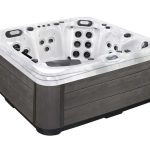 Hot Tubs
 Saunas
 Softub
 Hyperbaric
 Red Light
HOT TUBS & HYDROTHERAPY
Warm Water, Hydrotherapy & a Better Way to Unwind at Home
A hot tub can be part of a recovery routine, a backyard wellness space, or simply a place you genuinely look forward to using at the end of the day.
That’s an important distinction.
Not every piece of wellness equipment has to feel like another workout.
Hot tubs combine warm-water immersion, buoyancy, hydrotherapy jets, and relaxation in a way that cold plunges, saunas, and red light therapy don’t.
For some people, that’s exactly what their home wellness routine is missing.
WHY HOT TUBS STILL MATTER IN MODERN WELLNESS
Cold plunging has become incredibly popular.
Saunas are everywhere.
Red light therapy continues to grow.
And I like all of them.
But sometimes I think we’ve made recovery more complicated than it needs to be.
There are days when I don’t want another challenge.
I don’t want to count minutes in freezing water.
I don’t want to turn recovery into something else I have to accomplish.
I want to get in the hot tub.
Warm water, buoyancy, strategically positioned jets, and a place to slow down can be incredibly valuable when you’re building a wellness routine you’ll actually use.
That’s why I don’t think of a hot tub as old-fashioned wellness equipment.
I think it’s one of the most versatile pieces of equipment you can put at home.
— Jeff Rempfer
Vice President, Avantikul
29-Year Firefighter
WHAT IS HYDROTHERAPY?
Hydrotherapy is a broad term for using water as part of a wellness, rehabilitation, or therapeutic experience.
With a hot tub, several things happen at the same time:
HEAT
Your body is immersed in warm water.
BUOYANCY
Water supports part of your body weight.
WATER PRESSURE
Immersion creates pressure around the body.
MOVEMENT
Jets move water against targeted areas of the body.
RELAXATION
You’re physically removed from a lot of the distractions that surround you during the rest of the day.
Those factors create an experience that’s very different from simply sitting somewhere warm.
WARM-WATER IMMERSION IS DIFFERENT FROM A SAUNA
A hot tub and sauna both expose you to heat.
But they’re not interchangeable.
A SAUNA
primarily creates a heated environment around your body.
Depending on the sauna, that may come from heated air or infrared energy.
A HOT TUB
surrounds your body with warm water.
That adds buoyancy and water pressure, and a hot tub can also provide targeted hydrotherapy jets.
Some people love the sauna experience.
Other people would choose warm water every time.
Neither choice is universally better.
The question is which experience you’re actually going to use.
WHAT DOES WARM WATER ACTUALLY DO?
Warm-water immersion creates real physiological responses.
As your body is exposed to heat, blood vessels near the skin can dilate, circulation changes, and heart rate may increase as your body works to regulate temperature.
Researchers continue to study hot-water immersion and other forms of passive heat exposure for cardiovascular, metabolic, thermoregulatory, exercise, and recovery-related outcomes.
That’s interesting research.
But it’s also where wellness marketing can get ahead of the evidence.
We wouldn’t tell you that buying a hot tub prevents cardiovascular disease, fixes circulation, eliminates inflammation, or replaces exercise.
Those claims go much further than the evidence allows.
You don’t need exaggerated promises to make warm-water immersion worthwhile.
WHAT ABOUT RELAXATION?
This may be one of the most overlooked benefits of owning a hot tub.
A lot of modern wellness is focused on doing something:
Train harder.
Recover faster.
Track another metric.
Hit another target.
Sometimes the value of a hot tub is exactly the opposite.
You stop.
You sit in warm water.
You put your phone down.
You talk to your spouse.
You spend time with your family.
Or you get 20 quiet minutes by yourself.
You don’t need a laboratory measurement to decide that having a place where you regularly slow down has value.
HOT TUBS AND EXERCISE RECOVERY
Warm-water immersion and post-exercise heat exposure have both been studied in exercise science.
Researchers have looked at things such as circulation, muscle temperature, soreness, recovery, performance, sleep, and longer-term adaptation.
The results aren’t simple enough to say:
“Get in a hot tub after every workout and you’ll recover faster.”
Different studies use different temperatures, durations, exercise protocols, and outcomes.
That’s why I look at a hot tub as one recovery option, not a mandatory recovery protocol.
If warm water helps you relax after training and becomes part of a routine you enjoy, that’s useful.
SOMETIMES RECOVERY SHOULD ACTUALLY FEEL RELAXING
I spent 29 years as a firefighter.
I’ve trained.
I’ve been hurt.
I’ve gone through rehabilitation.
And I’ve spent plenty of time thinking about recovery.
One thing I’ve learned is that recovery doesn’t always need to be aggressive.
There are times when cold makes sense.
There are times when heat makes sense.
There are times when mobility work makes sense.
And there are times when my answer is:
Nope. I’m getting in the hot tub.
That doesn’t mean the other tools don’t work.
It means wellness equipment should fit your life instead of your life revolving around the equipment.
— Jeff
HOW HYDROTHERAPY JETS CHANGE THE EXPERIENCE
One of the biggest differences between a hot tub and other heat-based wellness equipment is the jets.
But don’t make the mistake of assuming:
MORE JETS = BETTER HOT TUB
It doesn’t work that way.
When I’m evaluating a hot tub for hydrotherapy, I care about:
WHERE ARE THE JETS?
Do they target the areas you actually want to address?
WHAT KIND OF JETS ARE THEY?
Different jet designs create different water movement.
HOW MUCH CONTROL DO YOU HAVE?
Can you adjust the experience?
HOW IS THE SEAT DESIGNED?
A jet isn’t very useful if your body doesn’t naturally line up with it.
HOW IS THE WATER POWERED?
Pump performance and plumbing design matter.
Twenty thoughtfully positioned jets can provide a better experience for someone than a spa with a huge jet count arranged primarily to make the specification sheet look impressive.
Don’t shop by jet count alone.
WHERE DO YOU WANT THE JETS?
This is one of the questions I’d ask before recommending a spa.
Do you care most about your:
- NECK & SHOULDERS?
- UPPER BACK?
- LOWER BACK?
- HIPS?
- LEGS?
- CALVES?
- FEET?
Or do you want a more general full-body experience?
The answer can influence which seating configuration and jet layout makes sense.
This is also why sitting in a hot tub before buying one can be useful whenever that’s practical.
Two spas that look similar in photographs can feel completely different when you’re actually sitting in them.
LOUNGER OR OPEN SEATING?
Neither is automatically better.
LOUNGER
A lounger allows you to recline and may provide jets along the back, legs, calves, and feet.
Some people absolutely love that experience.
But body size and buoyancy matter. A lounger that fits one person perfectly may not fit someone else the same way.
OPEN SEATING
Open seating can make it easier to move between positions and may work particularly well when multiple people regularly use the spa.
It can also provide a more social seating arrangement.
Think about who will actually use the hot tub, not just which interior looks impressive in a photograph.
HOW MANY PEOPLE WILL REALLY USE IT?
Hot tubs are often described by seat count.
That’s useful, but don’t make it the only consideration.
Ask yourself:
- How many people will use it most of the time?
- How often will guests use it?
- Do you want everyone sitting upright?
- Do you want a lounger?
- How much personal space do you prefer?
A couple buying a hot tub for themselves may choose differently from a family planning to use it together.
Buy for your real life.
HOT TUB + COLD PLUNGE
This is one of my favorite combinations.
A hot tub gives you:
- HEAT
- WARM-WATER IMMERSION
- BUOYANCY
- HYDROTHERAPY
A cold plunge gives you:
CONTROLLED COLD-WATER IMMERSION
Put them together and you can create a hot-and-cold routine without owning a sauna.
That can work extremely well for someone who prefers warm water over sitting in a heated room.
HOT TUB + SAUNA
These aren’t redundant.
Yes, they’re both heat experiences.
But they feel completely different.
A sauna gives you a dedicated passive-heat environment.
A hot tub gives you warm-water immersion and hydrotherapy.
Someone building a larger home wellness space may genuinely enjoy having both.
Someone else may decide one is plenty.
Again:
Start with what you want to accomplish. Then choose the equipment.
HOT TUB + COLD PLUNGE + SAUNA
Now you’re building a much more complete wellness environment.
You have:
WARM WATER + HYDROTHERAPY
Hot Tub
COLD
Cold Plunge
HEAT
Sauna
And if you add red light therapy, you have another modality that can fit particularly well near a home gym or indoor wellness area.
Do you need all of that?
Absolutely not.
But if you’re intentionally creating a larger home wellness environment, those tools provide very different experiences.
The key is designing the space around how you’ll actually move between and use them.
DESIGN THE SPACE BEFORE YOU BUY THE EQUIPMENT
This is one of the biggest pieces of advice I can give someone building a backyard wellness space.
Don’t buy four pieces of equipment and then try to figure out where everything goes.
Think about:
- FOUNDATION
- ELECTRICAL SERVICE
- WATER
- DRAINAGE
- SHADE
- PRIVACY
- LIGHTING
- WALKING SURFACES
- EQUIPMENT CLEARANCES
- COVER OPERATION
- STEPS
- SERVICE ACCESS
- HOW YOU’LL MOVE BETWEEN EQUIPMENT
And think about what the space might become later.
Maybe you’re buying the hot tub today.
But could you want a cold plunge next year?
A sauna?
Red light therapy?
Planning for those possibilities now can make expansion much easier later.
WHAT DOES A HOT TUB SIT ON?
A filled hot tub is heavy.
Very heavy.
The installation surface needs to be level, structurally appropriate, and capable of supporting the filled spa plus its occupants.
Concrete is common.
Other properly designed surfaces may also work depending on the spa, site, and installation.
The important point is this:
Don’t assume a surface is appropriate just because it looks flat.
Use the requirements for the actual spa and make sure the foundation is appropriate before delivery.
WHAT ABOUT ELECTRICAL?
Electrical requirements vary by hot tub.
Some smaller spas may operate on 120-volt service.
Many full-size spas require a dedicated higher-voltage circuit and appropriate disconnect/GFCI protection.
Don’t prepare electrical service based on what another person’s hot tub required.
Use the installation specifications for the exact spa you’re purchasing and have the work performed according to applicable codes and manufacturer requirements.
THINK ABOUT SERVICE ACCESS
This is easy to overlook when designing a beautiful backyard.
Hot tubs contain equipment that may eventually need to be inspected or serviced.
Don’t build a gorgeous installation that makes it nearly impossible for a technician to reach the equipment.
Before placing the spa, identify:
- Where is the equipment compartment?
- How will a technician reach it?
- Can panels be removed?
- Will decking, walls, landscaping, or other wellness equipment block access?
A little planning here can prevent a big headache later.
WHAT ABOUT THE COVER?
The cover needs somewhere to go.
That sounds obvious.
It gets forgotten all the time.
If you’re using a cover lifter, account for the clearance it requires.
Also consider how the raised cover affects:
- THE VIEW
- PRIVACY
- ACCESS
- MOVEMENT AROUND THE SPA
The best position for the hot tub isn’t always the place where it happens to fit.
HOT TUB MAINTENANCE DOESN’T HAVE TO BE COMPLICATED
Every hot tub needs maintenance.
The exact routine depends on the spa and sanitation system, but ownership generally involves:
- WATER CHEMISTRY
- FILTRATION
- SANITATION
- FILTER CLEANING OR REPLACEMENT
- SURFACE CLEANING
- PERIODIC WATER REPLACEMENT
- EQUIPMENT MONITORING
Once you understand the routine, it shouldn’t feel mysterious.
And maintenance is something worth understanding before you buy.
Ask what you’ll actually need to do to keep the water clean and the spa operating properly.
HOW OFTEN SHOULD YOU CHANGE HOT TUB WATER?
There isn’t one schedule that fits every household.
Water volume matters.
How many people use the spa matters.
How frequently you use it matters.
Water chemistry, filtration, sanitation, and maintenance all matter.
Follow the guidance for the particular spa and water-care system rather than treating an arbitrary calendar interval as universal.
HOW HOT SHOULD A HOT TUB BE?
There isn’t one temperature everyone needs to use.
Comfort, ambient conditions, session duration, individual heat tolerance, health considerations, and manufacturer guidance all matter.
What I don’t recommend is assuming:
Hotter = better.
Just like colder isn’t automatically better with a cold plunge, hotter isn’t automatically better with a hot tub.
Find a comfortable setting that fits how you’re using it and stay within the manufacturer’s operating and safety guidance.
HOW LONG SHOULD YOU STAY IN A HOT TUB?
Again, there’s no universal number for everyone.
Water temperature matters.
So do hydration, ambient temperature, medications, pregnancy, health conditions, alcohol use, and your individual response to heat.
Don’t turn hot-tub time into an endurance event.
If you feel dizzy, lightheaded, nauseated, unusually weak, confused, or otherwise unwell, get out and cool down.
CAN YOU USE A HOT TUB EVERY DAY?
Many owners make their hot tub part of their regular routine.
You don’t need a scientifically optimized schedule to enjoy one.
Frequency should make sense for your health, water temperature, session duration, and how you respond.
The important thing is that the routine fits your life.
CAN A HOT TUB HELP WITH SLEEP?
Warm-water bathing before bedtime has been studied in relation to sleep, and research suggests appropriately timed passive water heating may help some sleep outcomes.
But that doesn’t mean we should promise that owning a hot tub will cure insomnia.
If an evening soak helps you relax and becomes part of your wind-down routine, that’s a perfectly reasonable way to use your spa.
Persistent sleep problems deserve appropriate medical evaluation.
CAN A HOT TUB HELP WITH STRESS?
A lot of people find warm-water immersion relaxing.
That isn’t the same thing as saying a hot tub treats anxiety, depression, or another mental-health condition.
Those are different claims.
I think we can acknowledge something much simpler:
Creating a place at home where you intentionally slow down can be valuable.
And for many people, that’s one of the main reasons they use their hot tub.
CAN A HOT TUB “DETOX” YOUR BODY?
I wouldn’t buy a hot tub for that reason.
Heat exposure can cause sweating.
That doesn’t mean a hot tub is “flushing toxins” from your body.
Your liver and kidneys perform most of the work involved in processing and eliminating waste.
There are plenty of legitimate reasons to enjoy warm-water immersion without attaching a detox claim to it.
DOES A HOT TUB BURN FAT OR CAUSE WEIGHT LOSS?
A hot tub shouldn’t be considered a weight-loss treatment.
Heat exposure creates physiological responses and passive heating is an active area of research.
That’s different from demonstrating that sitting in a hot tub produces meaningful long-term fat loss.
Nutrition, physical activity, sleep, and overall lifestyle remain much more important.
CAN A HOT TUB REPLACE EXERCISE?
No.
Researchers study passive heat exposure partly because heat creates some physiological responses that overlap with responses seen during exercise.
That doesn’t make a hot tub a replacement for physical activity.
If you’re able to exercise, movement and physical activity remain important parts of health.
A hot tub can be part of your wellness routine.
It doesn’t need to pretend to be your workout.
WHAT SHOULD I LOOK FOR WHEN BUYING A HOT TUB?
Don’t start with the number of jets.
I’d look at:
HOW YOU’LL USE IT
Relaxation? Hydrotherapy? Family time? Post-workout routine? Contrast therapy?
SEATING
Open seating, lounger, or a combination?
FIT
Do the seats actually fit the people who will use them?
JET PLACEMENT
Where does the water actually hit your body?
CONTROL
Can you adjust the hydrotherapy experience?
INSULATION & EFFICIENCY
How is the spa designed to retain heat?
WATER CARE
What filtration and sanitation systems does it use?
CONTROLS
Is the spa straightforward to operate?
BUILD QUALITY
How is the shell, cabinet, plumbing, equipment, and structure built?
WARRANTY
What is actually covered, and for how long?
SERVICE & SUPPORT
Who helps you if you have a question or something needs attention?
INSTALLATION
What foundation, electrical service, access, and clearances are required?
That’s a much better way to shop than:
“Which one has the most jets?”
SHOULD YOU BUY A HOT TUB ONLINE?
You can.
But understand what you’re buying and what support comes with it.
Ask about:
- DELIVERY
- PLACEMENT
- ELECTRICAL REQUIREMENTS
- STARTUP
- WATER CARE
- WARRANTY
- PARTS
- TECHNICAL SUPPORT
- LOCAL SERVICE AVAILABILITY
A hot tub isn’t a toaster.
It’s a substantial piece of equipment that contains pumps, heaters, controls, plumbing, filtration, and electrical components.
The support behind the product matters.
AVANTIKUL + SUNSET SPAS
Avantikul offers select hot tubs to customers throughout the United States.
Avantikul and Sunset Spas share common ownership, bringing decades of hot-tub and wellness-industry experience to the selection and support of these products.
Customers in Arizona and Nevada can also visit Sunset Spas showrooms to see select hot tubs in person.
If you’re shopping online, our goal isn’t simply to get a spa into your cart.
We want to help you understand:
- What are you trying to accomplish?
- Who will use the spa?
- Where will it go?
- What type of seating do you prefer?
- What type of hydrotherapy matters to you?
- What other wellness equipment do you already have—or plan to add?
Then we can help narrow the choices.
JEFF’S IDEAL HOME WELLNESS SETUP
If I had the space and wanted a complete setup?
I’d want options.
HOT TUB
For warm water, hydrotherapy, relaxation, and the days when I just want to get in and unwind.
COLD PLUNGE
For controlled cold exposure when that fits what I’m doing.
SAUNA
For a dedicated heat experience.
RED LIGHT THERAPY
For another modality that can fit easily into a home gym or wellness environment.
MOBILITY SPACE
Because sometimes what you actually need is room to move.
But here’s the important part:
You don’t need my setup.
You need the setup you’ll use.
One hot tub that you enjoy four nights a week may provide far more value to you than an elaborate wellness room full of equipment you barely touch.
Frequently Asked Questions
Is a hot tub considered hydrotherapy?
Hot tubs can provide a form of hydrotherapy through warm-water immersion, buoyancy, and water movement from jets.
The experience varies significantly depending on the spa’s seating, jet placement, water pressure, and design.
Is a hot tub or sauna better?
Neither is universally better.
A sauna provides a dedicated heat environment.
A hot tub provides warm-water immersion, buoyancy, and hydrotherapy jets.
Choose based on which experience fits your goals and which you’re more likely to use consistently.
Is a hot tub good after exercise?
Many people enjoy warm-water immersion after exercise.
Research on post-exercise heat exposure and hot-water immersion continues to examine recovery and training outcomes, but results depend on the exercise, heat protocol, timing, and outcome being measured.
Don’t think of a hot tub as mandatory after every workout.
Is a hot tub good with a cold plunge?
Yes, if you enjoy both warm- and cold-water immersion.
A hot tub can provide the heat side of a contrast-therapy setup while also giving you hydrotherapy jets and buoyancy.
Do I need a sauna if I have a hot tub?
No.
A sauna and hot tub provide different heat experiences, but you don’t need to own both.
Choose the equipment that fits the experience and routine you want.
Are more hot tub jets better?
Not necessarily.
Jet placement, design, adjustability, water delivery, seating position, and how the spa fits your body matter more than simply having the largest jet count.
Can I put a hot tub in a home gym?
Potentially, but placement should be evaluated carefully.
Water, humidity, drainage, structural support, electrical requirements, access, ventilation, and serviceability all need to be considered.
Often the better solution is putting the hot tub immediately outside or near the home gym rather than physically inside it.
Can a hot tub be part of a backyard wellness space?
Absolutely.
A hot tub can be the centerpiece of a backyard wellness environment or one component alongside a cold plunge, sauna, outdoor shower, seating area, or other wellness equipment.
BUILD THE ROUTINE YOU’LL ACTUALLY USE
This is really what all of this comes down to.
Don’t build your wellness space around somebody else’s Instagram account.
Don’t buy a cold plunge because everyone else has one.
Don’t buy a sauna because you think you’re supposed to.
And don’t overlook a hot tub because it doesn’t feel like the newest wellness trend.
Ask yourself:
What experience do I actually want at home?
Maybe that’s cold.
Maybe it’s heat.
Maybe it’s hydrotherapy.
Maybe it’s contrast.
Maybe it’s all of them.
Or maybe what you really want at the end of a long day is warm water, a comfortable seat, a few well-placed jets, and 20 minutes where nobody needs anything from you.
That’s a pretty good wellness routine too.
Important Health Information
Warm-water immersion and heat exposure create physiological responses and aren’t appropriate for everyone.
People with cardiovascular or circulation concerns, certain medical conditions, people taking medications that may affect blood pressure, heat tolerance, or alertness, pregnant individuals, and anyone unsure whether hot-tub use is appropriate for them should consult an appropriate healthcare professional.
Avoid hot-tub use when impaired by alcohol or other substances that could affect judgment, alertness, or the ability to respond safely to heat.
Always follow the temperature, operating, installation, and safety guidance provided by the manufacturer of your particular hot tub.
Information provided by Avantikul is intended for general educational purposes and isn’t medical advice or a substitute for individualized medical care.