WHAT IS HOME GYM WELLNESS?
To me, home gym wellness means looking beyond the workout itself.
Your training space might include equipment for:
- Strength
- Cardiovascular fitness
- Mobility
- Recovery
- Relaxation
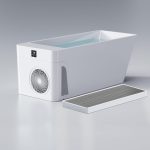
That could mean adding a cold plunge near the gym.
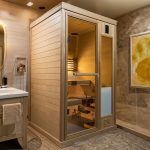
It could mean putting a sauna in the garage.
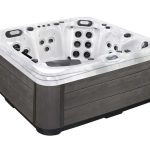
It might mean having a hot tub outside the door.
Or it could mean keeping a red light therapy setup in a smaller area where you don’t have room for larger equipment.
The point isn’t to turn your house into a professional training facility.
The point is to make the things you actually use more convenient.
START WITH HOW YOU TRAIN
Before I’d recommend any recovery equipment, I’d want to know what kind of training you’re doing.
Are you primarily:
- Lifting weights?
- Training for endurance?
- Doing high-intensity interval training?
- Exercising for general fitness?
- Training for a particular sport?
- Trying to stay active as you get older?
Those aren’t necessarily the same goals.
And that’s important because the way you use recovery equipment may change depending on what you’re trying to accomplish.
Goal first. Equipment second.
COLD PLUNGES AND HOME GYMS
Don’t Just Copy Somebody Else’s Routine
Cold plunges have become extremely popular around home gyms.
I understand why.
They’re convenient.
They’re challenging.
And there’s something very simple about stepping into cold water and knowing immediately that you’re doing something uncomfortable.
But there’s an important distinction people sometimes miss:
Using a cold plunge and using a cold plunge immediately after every workout aren’t the same question.
Timing matters.
So does your training goal.
SHOULD YOU COLD PLUNGE AFTER LIFTING WEIGHTS?
If maximizing muscle growth is your primary goal, I’d be cautious about automatically jumping into very cold water immediately after every resistance-training session.
Research suggests that repeated cold-water immersion immediately following resistance exercise may reduce some of the adaptations associated with muscle growth.
That doesn’t mean cold plunging is “bad.”
And it doesn’t mean someone who lifts weights can never use a cold plunge.
It means context matters.
There’s a difference between:
Recovering from today’s workout
and
Adapting to today’s workout.
Cold-water immersion may help reduce perceived muscle soreness after strenuous exercise.
But if your goal is maximizing the long-term adaptation from resistance training, the timing of cold exposure deserves some thought.
That’s exactly why I don’t like one-size-fits-all wellness advice.
READ: SHOULD I COLD PLUNGE AFTER LIFTING WEIGHTS? →
COLDER ISN’T BETTER
This comes up constantly with cold plunges.
People see a machine that can reach an extremely low temperature and assume that’s where they should set it.
Not necessarily.
The lowest temperature on the machine tells you what the equipment can do.
It doesn’t tell you what you need to do.
Temperature, time, experience, health, and purpose all matter.
If you’re new to cold-water immersion, start conservatively.
Learn how your body responds.
Then make adjustments.
Cold plunging doesn’t need a scoreboard.
READ: HOW COLD DOES A COLD PLUNGE REALLY NEED TO BE? →
WHAT ABOUT A SAUNA AFTER EXERCISE?
A sauna creates a completely different experience.
Instead of cold exposure, you’re intentionally exposing yourself to heat.
For me, one of the biggest advantages of having a sauna near a home gym is simple:
You finish training and it’s right there.
There’s no drive.
No locker room.
No waiting.
You can finish your workout, hydrate, slow down, and transition into another part of your routine.
Researchers continue to study passive heat exposure and its relationship with cardiovascular responses, recovery, and other aspects of health and performance.
But you don’t need to turn every sauna session into a scientific experiment.
Sometimes a warm, quiet place to sit after training is valuable because it gives you a reason to stop moving for a while.
EXPLORE SAUNAS →
HOT TUBS AND HOME FITNESS
Sometimes Recovery Should Actually Feel Relaxing
Not every recovery tool needs to be uncomfortable.
I’ve spent enough years doing physically demanding work to appreciate that.
A hot tub gives you something neither a sauna nor cold plunge provides in quite the same way:
Warm-water immersion plus hydrotherapy.
You can sit.
You can move around.
You can position different areas of your body around the jets.
And you can relax.
For some people, that’s going to become a much more consistent part of their routine than something that requires them to psych themselves up every time they use it.
There’s value in that.
Recovery shouldn’t always feel like another workout.
EXPLORE HOT TUBS →
RED LIGHT THERAPY IN A HOME GYM
Red light therapy is another product category that can fit naturally into a home fitness environment, particularly when space is limited.
Depending on the equipment, it can require considerably less room than a sauna, cold plunge, or hot tub.
There is legitimate research examining photobiomodulation — commonly called red light therapy — across a variety of applications.
There are also a lot of claims online that go far beyond what the research can support.
That’s where I think you have to be careful.
I don’t believe a wellness product needs to cure everything in order to be useful.
If you’re considering red light therapy, look at the actual equipment, wavelengths, treatment area, intended use, and available research rather than choosing based on the longest list of promised benefits.
SHOP RED LIGHT THERAPY →
COLD PLUNGE + SAUNA
A Natural Combination for a Home Gym
If someone tells me they want to build a more complete recovery area around a home gym, a sauna and cold plunge are an obvious combination to consider.
One gives you controlled heat.
The other gives you controlled cold.
That allows you to use them separately or create a contrast-therapy routine.
But again, I wouldn’t automatically prescribe:
X minutes hot
then
X minutes cold
repeated a certain number of times.
I’d first ask:
Why are you doing it?
The answer should influence the routine.
EXPLORE CONTRAST THERAPY →
DO RECOVERY PRODUCTS NEED TO BE INSIDE THE GYM?
No.
This is one of the easiest mistakes to make when planning a home gym.
People look at the four walls and ask:
“How do I fit everything in here?”
Maybe you don’t.
Look around the gym.
Is there a patio outside?
A garage bay?
A side yard?
A backyard?
An adjoining room?
Your gym might be indoors while the sauna and cold plunge are immediately outside.
Your hot tub might be across the patio.
That’s still part of your home fitness environment.
Think about the routine instead of the room.
BUILDING A HOME GYM IN THE GARAGE?
Think About Recovery Before You Fill Every Wall
Garages make excellent home gyms.
They can also work well for certain recovery equipment.
But if you’re still designing the space, think ahead.
Before you permanently fill every wall with storage and gym equipment, consider whether you may eventually want:
- A cold plunge
- A sauna
- Red light therapy
- A stretching or mobility area
You don’t necessarily have to buy everything now.
But planning for electrical service, drainage, ventilation, flooring, and equipment clearances now can make adding equipment later much easier.
WATER CHANGES THE ROOM
If you’re putting a cold plunge anywhere near a home gym, remember something obvious that gets overlooked:
You’re adding water to the space.
People get in wet.
People get out wet.
Water gets on the floor.
Think about:
- Drainage
- Flooring
- Slip resistance
- Water-resistant surfaces
- Where towels go
- How you’ll fill the plunge
- How you’ll drain it
- How you’ll service it
Don’t discover these things after the equipment arrives.
VENTILATION MATTERS TOO
Heat-producing equipment changes a room.
So can humidity.
If you’re putting wellness equipment indoors or in an enclosed garage, make sure you’re considering the installation and ventilation requirements of the actual equipment you’re buying.
Don’t design the room around assumptions.
Design it around the specifications.
WHAT IF YOUR HOME GYM IS SMALL?
Then don’t try to force everything into it.
A small gym can still be part of a much larger home wellness environment.
Maybe the gym contains your training equipment and red light therapy.
The cold plunge sits outside.
The sauna goes on the patio.
The hot tub is in the backyard.
You haven’t created four separate spaces.
You’ve created one routine that moves through your home.
That’s the way I’d look at it.
WHAT WOULD I PUT IN MY IDEAL HOME GYM RECOVERY SETUP?
If space and budget weren’t the limiting factors?
I’d want options.
- A cold plunge.
- A sauna.
- A hot tub with good hydrotherapy.
And enough open floor space for mobility and stretching.
Would I use every one of those after every workout?
Absolutely not.
That’s the point.
Different days call for different things.
There are days when cold might fit what I’m doing.
There are days when I’d rather use the sauna.
And there are days when I’d look at both of them and say:
“Nope. I’m getting in the hot tub.”
That’s what having options gives you.
DON’T TURN RECOVERY INTO ANOTHER WORKOUT
This might be the biggest thing I’d tell someone building a home recovery space.
Don’t make the entire process so complicated that you stop enjoying it.
You don’t need to:
Track every minute.
Measure every response.
Hit the coldest temperature.
Stay in the sauna longer than everyone else.
Use every piece of equipment every day.
You already did the workout.
Recovery shouldn’t become another competition.
Use the equipment because it fits your life.
HOME GYM WELLNESS FAQs
Should every home gym have a cold plunge?
No.
A cold plunge can be a great addition for someone who enjoys cold-water immersion and has a reason to use it.
But there’s no rule saying a home gym needs one.
Start with your goals.
Should I cold plunge immediately after lifting weights?
Not automatically.
If maximizing muscle growth is a major goal, repeated immediate cold-water immersion after resistance training may not be the best fit.
If short-term recovery is more important, the decision may be different.
READ JEFF’S FULL ANSWER →
Is a sauna good after working out?
Many people enjoy sauna use after exercise because it provides a warm environment where they can slow down and relax.
Passive heat exposure also creates physiological responses that researchers continue to study.
Whether it fits your routine depends on your health, training, hydration, and personal preference.
Is a hot tub good after working out?
A hot tub provides warm-water immersion, hydrotherapy jets, and an environment many people find relaxing after exercise.
Whether and when you use it should depend on your goals and how you respond.
Should I get a sauna or cold plunge for my home gym?
They do different things.
If you want controlled cold exposure, consider a cold plunge.
If you want a dedicated heat experience, consider a sauna.
If you want both, they can work extremely well together.
What about a hot tub?
Don’t overlook it.
If warm-water immersion, hydrotherapy, and relaxation appeal to you, a hot tub can be one of the most frequently used pieces of wellness equipment you own.
Do I need a separate recovery room?
No.
Your recovery equipment can be located wherever it makes sense around your home.
The gym, garage, patio, side yard, and backyard can all be part of the same wellness environment.
What’s the best home gym recovery equipment?
The equipment that fits your goals and that you’ll actually use.
One product you use consistently beats four products you don’t.
BUILD YOUR GYM AROUND THE WHOLE ROUTINE
You already thought about the workout.
Now think about what happens afterward.
Where do you cool down?
Where do you stretch?
Where do you slow down?
Would you actually use a cold plunge?
Would you use a sauna?
Would you spend more time in a hot tub?
Where would each piece of equipment go?
And how easy would it be to move from the gym to the recovery space?
Those questions will tell you much more than a list of the “best recovery products.”
Start with your routine.
Then build the space around it.
EXPLORE HOME GYM WELLNESS
COLD PLUNGES
Controlled cold-water immersion without rebuilding an ice bath every time you want to use it.
SHOP COLD PLUNGES →
SAUNAS
Create a dedicated heat and relaxation environment at home.
SHOP SAUNAS →
HOT TUBS
Combine warm-water immersion, hydrotherapy, and relaxation.
SHOP HOT TUBS →
RED LIGHT THERAPY
Explore red light therapy equipment that can fit naturally into a home fitness and wellness environment.
SHOP RED LIGHT THERAPY →
CONTRAST THERAPY
Learn how heat and cold can work together as part of a home wellness routine.
EXPLORE CONTRAST THERAPY →
NOT SURE WHAT BELONGS IN YOUR HOME GYM?
Tell us how you train.
Tell us what you’re trying to accomplish.
Tell us how much space you have.
We’ll help you think through the equipment that actually makes sense.
TALK WITH A WELLNESS EXPERT →
Important Health Information
Information provided by Avantikul is intended for general educational purposes and to help customers understand wellness equipment.
It isn’t medical advice and isn’t intended to diagnose, treat, cure, or prevent any disease or medical condition.
Individual responses to exercise, heat, cold, and other wellness practices vary. Consult an appropriate healthcare professional when you have questions about whether a particular practice is suitable for your individual health circumstances.

 Cold Plunge
 Hot Tubs
 Saunas
 Softub
 Hyperbaric
 Red Light