
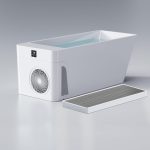
 Cold Plunge
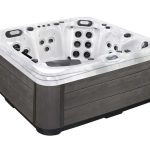 Hot Tubs
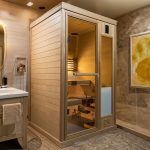 Saunas
 Softub
 Hyperbaric
 Red Light
ASK JEFF
Straight Answers About Cold Plunges, Saunas, Hot Tubs & Home Wellness
There’s no shortage of wellness advice online.
Some of it is useful.
Some of it makes things much more complicated than they need to be.
And some of it makes promises I wouldn’t make.
After 29 years as a firefighter, my own experience with injuries and rehabilitation, and years around hot tubs, cold plunges, saunas, and home wellness equipment, I’ve developed a pretty simple approach:
Start with what you’re trying to accomplish. Then choose the tools that help you get there.
That’s what Ask Jeff is about.
These are the questions people ask us about cold plunging, saunas, hot tubs, contrast therapy, exercise recovery, and creating wellness spaces at home.
I’ll give you the straightforward answer first.
And when the answer really is “it depends,” I’ll explain what it depends on.
— Jeff Rempfer
Vice President, Avantikul
29-Year Firefighter | Home Wellness & Recovery Expert
Got a Question? Just Ask.
EXPLORE THE QUESTIONS ↓
COLD PLUNGE QUESTIONS
How cold does a cold plunge really need to be?
Probably not as cold as you think.
There isn’t one perfect cold-plunge temperature for everyone.
Water temperature, exposure time, your experience with cold, your health, and what you’re trying to accomplish all matter.
If you’re new to cold-water immersion, I’d rather see you start conservatively and learn how your body responds than immediately set your plunge to its lowest possible temperature.
You can always make the water colder.
Colder isn’t automatically better.
READ JEFF’S FULL ANSWER: HOW COLD DOES A COLD PLUNGE REALLY NEED TO BE? →
How long should I stay in a cold plunge?
There’s no magic number that applies to everybody.
Temperature and time work together.
A few minutes in moderately cold water is a very different experience from the same amount of time in extremely cold water.
Your experience matters too.
If you’re starting out, start conservatively.
Don’t stay in because somebody online told you that you’re supposed to hit a certain number on a timer.
Cold plunging isn’t an endurance contest.
Should I cold plunge after lifting weights?
It depends on what you’re trying to accomplish.
If your primary goal is maximizing muscle growth, I wouldn’t make an immediate cold plunge an automatic part of every resistance-training session.
Research suggests repeatedly using cold-water immersion immediately after resistance exercise may reduce some of the adaptations associated with muscle growth.
On the other hand, cold-water immersion has evidence supporting reductions in post-exercise soreness and may be useful when short-term recovery is the priority.
That’s an important distinction:
Recovering from today’s workout and adapting to today’s workout aren’t always exactly the same thing.
READ JEFF’S FULL ANSWER: SHOULD I COLD PLUNGE AFTER LIFTING WEIGHTS? →
Is an ice bath the same as a cold plunge?
The cold-water experience can be similar. The equipment isn’t.
An ice bath typically requires you to add ice and manage the temperature yourself.
A purpose-built cold plunge can chill and maintain water at a controlled temperature and may also provide circulation, filtration, and sanitation.
If you’re only going to try cold-water immersion occasionally, an ice bath may introduce you to the experience.
If you want to make cold plunging part of your routine, having water ready when you are changes things considerably.
Convenience makes consistency easier.
Do I need to cold plunge every day?
No.
You don’t have to do something every day for it to have a place in your wellness routine.
How often you plunge should depend on why you’re doing it, your training schedule, experience, health, and how you respond.
I’d rather see someone develop a routine that fits their life than force themselves to follow somebody else’s schedule.
Is colder always better?
No.
This is worth repeating.
Cold plunging has become strangely competitive.
How cold?
How long?
How much ice?
Temperature isn’t a score.
A good cold plunge gives you control over the experience.
Use that control to find what works for you rather than trying to beat somebody else’s number.
SAUNA QUESTIONS
What temperature should a sauna be?
First, tell me what kind of sauna we’re talking about.
Traditional and infrared saunas don’t necessarily operate at the same air temperatures.
That’s one reason I don’t like giving people a universal number.
Follow the operating guidance for your particular equipment and start conservatively if you’re new to heat exposure.
Then learn what kind of sauna experience you actually enjoy.
How long should I stay in a sauna?
There’s no reason to make sauna time an endurance event either.
The type of sauna, temperature, your experience, hydration, health, and how you feel during the session all matter.
If you’re new, start conservatively.
And if you feel dizzy, lightheaded, nauseated, unusually weak, or otherwise unwell, get out.
Sometimes people become so focused on completing a “protocol” that they stop listening to their own body.
Don’t do that.
Infrared sauna or traditional sauna: which is better?
I wouldn’t call either one universally better.
They create heat differently and can provide different experiences.
Traditional saunas primarily heat the surrounding air.
Infrared saunas use infrared energy to deliver heat and typically operate at lower air temperatures.
I’d choose based on the experience you prefer, where the sauna will go, available space, electrical requirements, capacity, and how you plan to use it.
The best sauna is the one that fits you and your space.
Do saunas really detox your body?
I’d be careful with the word “detox.”
You sweat in a sauna.
That’s real.
But your liver and kidneys do most of the work involved in processing and eliminating waste from your body.
Sweating shouldn’t be presented as a replacement for those systems.
There are legitimate reasons people enjoy saunas, and researchers continue to study heat exposure and health.
We don’t need exaggerated detox claims to make sauna ownership worthwhile.
LEARN MORE ABOUT COLD PLUNGE & SAUNA BENEFITS →
CONTRAST THERAPY QUESTIONS
What is contrast therapy?
At its simplest, contrast therapy involves alternating between heat and cold.
At home, that commonly means combining:
Sauna + Cold Plunge
or
Hot Tub + Cold Plunge
Those combinations don’t create exactly the same experience.
A sauna gives you a dedicated heat environment.
A hot tub gives you warm-water immersion and hydrotherapy.
The cold plunge gives you controlled cold-water immersion.
Having those tools at home lets you build the routine around yourself instead of somebody else’s schedule.
Should I sauna or cold plunge first?
Many people use heat first and cold afterward, but I don’t consider that a universal rule.
Your goal matters.
So does your experience, training, health, and how you respond to heat and cold.
This is exactly the kind of question where I’d rather explain the variables than give everybody one supposedly perfect protocol.
READ JEFF’S FULL ANSWER →
Is a hot tub or sauna better with a cold plunge?
They’re different — not better or worse.
A sauna gives you a dedicated heat experience.
A hot tub gives you warm-water immersion plus hydrotherapy jets.
If you specifically want a sauna-and-cold routine, sauna + cold plunge makes sense.
If you want warm water, hydrotherapy, relaxation, and cold exposure, hot tub + cold plunge may make more sense.
And if you have the room and want all three?
EXPLORE CONTRAST THERAPY →
Do I need a sauna and a cold plunge for contrast therapy?
No.
Heat can come from a sauna or warm-water immersion such as a hot tub.
The experience will be different, but both can create a heat-and-cold routine when paired with a cold plunge.
Start with the experience you want.
Then choose the equipment.
HOT TUB & HYDROTHERAPY QUESTIONS
READ JEFF’S HOT TUBS & HYDROTHERAPY GUIDE →
Is a hot tub useful if I already have a sauna?
Absolutely — if you enjoy what a hot tub provides.
A sauna and hot tub aren’t interchangeable.
A hot tub surrounds you with warm water and adds hydrotherapy jets.
A sauna provides a different type of heat experience.
There are days when I might want a sauna.
And there are definitely days when I’d rather get into warm water, turn on the jets, and relax.
Having both gives you options.
Hot tub or sauna: which should I buy first?
Tell me what you want from it.
If warm-water immersion, hydrotherapy, relaxation, and a more social experience are priorities, I’d seriously consider a hot tub.
If you’re specifically interested in sauna sessions and a dedicated heat experience, start there.
Don’t choose based on whichever product happens to be getting the most attention online.
Choose based on how you’re actually going to use it.
Can a hot tub be used for contrast therapy?
Yes.
A hot tub can provide the warm-water side of a hot-and-cold routine when paired with a cold plunge.
That creates a different experience from sauna + cold plunge because you’re moving between warm-water immersion and cold-water immersion.
The important thing is to think about the entire routine rather than treating the equipment as unrelated products.
HOME RECOVERY QUESTIONS
What equipment do I need for a home recovery space?
Start with your goal, not a shopping list.
Your home wellness setup might include:
A hot tub.
A cold plunge.
A sauna.
Red light therapy.
Or some combination of them.
But you don’t automatically need everything.
If someone tells me they have a certain amount of money to spend on a recovery room, I’m still going to ask what they’re trying to accomplish before telling them how to spend it.
EXPLORE HOME RECOVERY →
Do I need a dedicated recovery room?
No.
Your wellness equipment can be spread across whatever spaces make sense for your home.
Maybe the gym is inside.
The cold plunge is in the garage.
The sauna is outside.
The hot tub is on the patio.
If those spaces work naturally within your routine, you’ve created a home wellness environment.
The routine matters more than the room.
What’s the best first piece of home wellness equipment?
The one you’re most likely to use.
That answer isn’t very exciting.
But I believe it.
I’d rather see someone buy one piece of equipment they use consistently than build an impressive recovery room they barely walk into.
Think about what you genuinely enjoy and what you’re trying to accomplish.
Then start there.
HOME GYM & EXERCISE QUESTIONS
What’s the best recovery equipment for a home gym?
It depends on how you train.
Someone focused on strength and muscle growth may have different priorities from an endurance athlete.
Someone exercising primarily for general health may have different priorities again.
Cold plunges, saunas, hot tubs, red light therapy, and simple mobility space can all fit into a home fitness environment.
You don’t need all of them.
Does recovery equipment need to be inside my gym?
No.
Look beyond the four walls.
Your sauna could be in the garage.
Your cold plunge could be immediately outside.
Your hot tub could be on the patio.
If it’s convenient enough that it naturally becomes part of your routine, it works.
Is a hot tub or sauna better after a workout?
That depends on what you want from the experience.
A sauna gives you a dedicated heat environment.
A hot tub provides warm-water immersion and hydrotherapy jets.
There are also differences between relaxation, short-term recovery, and long-term training adaptation.
That’s why I wouldn’t reduce the answer to “this one is better.”
Start with your training and your goal.
READ JEFF’S FULL ANSWER →
BACKYARD WELLNESS QUESTIONS
Can I put a hot tub, sauna, and cold plunge in the same backyard?
Yes — and they can work extremely well together when the space is planned correctly.
Think about how you’ll move between them before deciding where everything goes.
Consider:
Electrical service.
Drainage.
Foundations.
Water access.
Equipment clearances.
Privacy.
Shade.
Lighting.
Walking surfaces.
Future service access.
Don’t treat them as three unrelated products.
Design the experience.
How close should my sauna and cold plunge be?
Close enough that using them together is convenient.
That’s the practical answer.
If you plan to move regularly between heat and cold, putting them at opposite ends of the property probably doesn’t make much sense.
But placement also has to account for electrical service, drainage, clearances, installation requirements, and future service access.
Convenience matters.
So does installing everything correctly.
How close should wellness equipment be to the house?
Close enough that you’ll actually use it.
There are other considerations — privacy, electrical service, drainage, aesthetics, manufacturer requirements — but don’t underestimate convenience.
Twenty feet feels considerably farther when you’re barefoot and wet.
Think about your backyard during the hottest part of summer.
Think about it when it’s cold.
Think about it at 9:00 at night.
Then decide.
What should I plan before pouring concrete?
Know your equipment first.
Know its dimensions.
Know its filled weight.
Know the required clearances.
Know where access panels are located.
Know where electrical connections need to go.
Know how water will drain.
And think about equipment you might add later.
It’s much easier to plan for another sauna or cold plunge today than redesign a finished backyard later.
SAFETY QUESTIONS
Is cold plunging safe for everyone?
No wellness practice is appropriate for everybody.
Cold-water immersion creates a real physiological response.
If you have cardiovascular or circulation concerns, certain medical conditions, take medications that could affect your response to cold, are pregnant, or simply aren’t sure whether cold-water immersion is appropriate for you, talk with a qualified healthcare professional.
I can help you understand the equipment.
I’m not going to pretend to be your doctor.
Is sauna use safe for everyone?
Not necessarily.
Heat exposure also creates physiological stress.
If you have cardiovascular concerns, another medical condition, take medications that may affect heat tolerance or blood pressure, are pregnant, or aren’t sure whether sauna use is appropriate for you, talk with your healthcare professional.
Once you know heat exposure is appropriate for you, we can help you understand the equipment.
WHAT I BELIEVE ABOUT HOME WELLNESS
After nearly three decades as a firefighter, injuries, rehabilitation, and my own experience with wellness and recovery equipment, I’ve developed a fairly simple philosophy.
Take care of yourself.
Stay active.
Pay attention to your body.
Find ways to slow down occasionally.
Don’t assume the newest trend is automatically the answer.
Don’t make wellness unnecessarily complicated.
And don’t build your routine around what somebody else is doing on social media.
Start with what you’re trying to accomplish.
Then choose the tools that help you get there.
That’s what I believe home wellness should be.
— Jeff Rempfer
Vice President, Avantikul
29-Year Firefighter | Home Wellness & Recovery Expert
WANT A DEEPER ANSWER?
Jeff Answers
Some questions deserve more than a few paragraphs.
That’s why we’re building the Jeff Answers library.
Each article takes one question and goes deeper into the research, practical considerations, and what I think you should understand before making it part of your routine.
START HERE
How Cold Does a Cold Plunge Really Need to Be? →
A practical look at cold-plunge temperature, why colder isn’t automatically better, and what actually matters when developing your routine.
Should I Cold Plunge After Lifting Weights? →
Why short-term recovery and long-term training adaptation aren’t always the same thing — and why your training goal matters.
How Long Should I Stay in a Cold Plunge? →
Why temperature and time have to be considered together — and why longer or colder isn’t automatically better.
COMING NEXT
Sauna or Cold Plunge First? →
Cold Plunge vs. Ice Bath: What’s the Difference? →
Is a Hot Tub or Sauna Better After a Workout? →
What Temperature Should an Infrared Sauna Be? →
How Do I Build a Home Contrast Therapy Setup? →
HAVE A QUESTION FOR JEFF?
If there’s something about cold plunging, saunas, hot tubs, hydrotherapy, contrast therapy, exercise recovery, home gyms, or backyard wellness that you don’t understand, ask us.
If one person is wondering about it, there’s a pretty good chance somebody else is too.
And if I don’t know the answer?
I’ll tell you that too.
I’d much rather give you an accurate answer than an impressive-sounding one.
WHAT ARE YOU TRYING TO ACCOMPLISH?
HOME RECOVERY
Create a convenient place to recover, relax, and reset at home.
CONTRAST THERAPY
Learn how cold plunges, saunas, and hot tubs can work together in a heat-and-cold wellness environment.
BACKYARD WELLNESS
Design an outdoor wellness space around how you actually want to use your backyard.
HOME GYM WELLNESS
Make recovery part of your home fitness environment.
NEED HELP?
Tell us what you’re trying to accomplish.
We’ll help you think through the equipment and the space.
Important Health Information
The information Jeff and Avantikul provide is intended for general educational purposes and to help customers understand wellness equipment.
It isn’t medical advice and isn’t intended to diagnose, treat, cure, or prevent any disease or medical condition.
Individual responses to heat, cold, exercise, photobiomodulation, and other wellness practices vary. Consult an appropriate healthcare professional when you have questions about whether a particular practice is suitable for your individual health circumstances.
Ask Jeff A Question with the form here.