
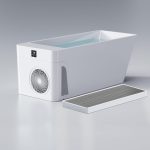
 Cold Plunge
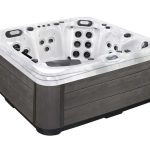 Hot Tubs
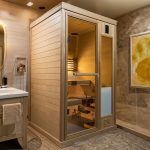 Saunas
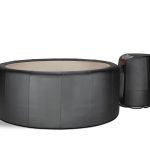 Softub
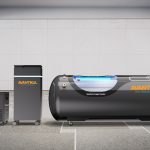 Hyperbaric
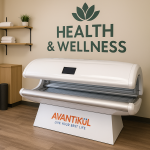 Red Light
Experience Changed the Way I Think About Wellness
Vice President, Avantikul | 29-Year Firefighter | Home Wellness & Recovery Expert
I didn’t get interested in recovery and wellness because it was trending.
I got interested because I needed it.
I spent 29 years as a firefighter. It’s a career I’m incredibly proud of, but it’s also a career that can take a toll on your body.
Over those years, I dealt with injuries. I had surgeries. I went through rehabilitation. And along the way, I became very familiar with many of the same types of recovery and wellness equipment we work with today at Avantikul.
That experience changed the way I think about wellness.
For me, this isn’t about chasing the newest trend.
It’s about finding practical ways to take care of yourself, stay active, recover, relax, and hopefully continue doing the things you enjoy for a very long time.
That’s what eventually became such an important part of what I do at Avantikul.
— Jeff Rempfer
Vice President, Avantikul
I CAME TO WELLNESS THROUGH EXPERIENCE
There’s a difference between reading about recovery and needing to recover.
I’ve done both.
During my firefighting career, injuries and surgeries meant rehabilitation became something I experienced firsthand.
You start paying attention when it’s your own body.
You learn that recovery isn’t something that happens because you bought a particular product.
It takes consistency.
And you also learn that different situations call for different approaches.
That’s one reason you’ll hear me say this frequently:
Start with what you’re trying to accomplish. Then talk about the equipment.
Not the other way around.
WHY I DON’T BELIEVE IN ONE PERFECT WELLNESS ROUTINE
Spend enough time online and you’ll eventually find someone telling you that there’s one perfect way to do just about everything.
Cold plunge at this temperature.
Stay in for exactly this long.
Sauna at this temperature.
Do this many rounds.
Always do cold after heat.
Never do cold after this.
I’ve never found wellness to be quite that simple.
People are different.
Their goals are different.
Their health histories are different.
Their training is different.
And what they’ll actually do consistently is different.
I think that’s important.
A routine that’s perfect on paper isn’t particularly valuable if you hate doing it.
MY APPROACH: GOAL FIRST. EQUIPMENT SECOND.
When someone asks me:
“Jeff, which cold plunge should I buy?”
I don’t necessarily want to start by showing them cold plunges.
I want to know why they want one.
Are you training?
Are you trying to build a home recovery routine?
Are you interested in contrast therapy?
Are you creating a backyard wellness space?
Do you simply enjoy cold-water immersion and want a convenient way to do it consistently?
The same thing applies to saunas and hot tubs.
Understanding why usually makes the conversation about what much easier.
That’s the philosophy I bring to Avantikul:
GOAL → ROUTINE → SPACE → EQUIPMENT
Figure those things out in that order and you’re much more likely to build a wellness environment you’ll actually use.
WHY HOME WELLNESS MATTERS TO ME
Convenience doesn’t sound very exciting.
But I think it’s one of the most important parts of wellness.
Think about the difference between saying:
“I should go somewhere and do that this week.”
and:
“It’s right outside.”
That’s a completely different situation.
Your sauna is there.
Your cold plunge is there.
Your hot tub is there.
You don’t have to make an appointment.
You don’t have to drive anywhere.
You don’t have to pack a bag.
You walk outside.
That removes a lot of excuses.
And when something becomes easy to incorporate into your life, you’re more likely to actually use it.
Consistency is where a home wellness space becomes valuable.
WHY I’M A FAN OF OPTIONS
If you ask me whether I prefer heat or cold, my answer is:
It depends on the day.
That’s why I like having different tools available.
There are times when I enjoy cold.
There are times when I want heat.
And there are definitely times when I’d rather get into a hot tub, turn on the hydrotherapy jets, and relax.
I don’t think every wellness session needs to become a complicated protocol.
Sometimes wellness means challenging yourself.
Sometimes it means slowing down.
And sometimes it means recognizing what you need that day.
COLD PLUNGING
Controlled Discomfort
Cold plunging became part of my own routine because I genuinely enjoy the experience.
I sometimes describe it as controlled discomfort.
You know the cold is coming.
You choose to get in anyway.
That initial moment demands your attention pretty quickly.
For me, that’s part of the appeal.
Everything else gets quiet for a little while.
But I’ve also watched cold plunging become increasingly competitive.
How cold?
How long?
How many minutes?
How much ice?
I don’t think that’s necessary.
Colder isn’t automatically better, and longer isn’t automatically better.
If you’re new to cold-water immersion, learn how your body responds. Start conservatively. Develop your own routine rather than trying to beat somebody else’s.
LEARN ABOUT COLD PLUNGING →
SAUNAS
Sometimes Heat Is Exactly What I Want
A sauna provides a completely different experience.
There’s something I appreciate about intentionally sitting still.
No workout.
No phone.
Nothing you’re supposed to accomplish.
Just heat and time.
That can be surprisingly difficult for people who spend their entire day moving from one thing to another.
It’s also why saunas fit so naturally into home wellness spaces.
You create a place where slowing down is the activity.
And if you’re interested in hot-and-cold routines, pairing a sauna with a cold plunge gives you another way to use the space.
EXPLORE SAUNAS →
HOT TUBS & HYDROTHERAPY
Recovery Doesn’t Always Need to Feel Like Work
This is something I think the wellness industry occasionally forgets.
We turn everything into a challenge.
Hard workout.
Cold plunge.
Hot sauna.
Another workout.
Repeat.
Sometimes I just want to get into warm water.
A good hot tub combines warm-water immersion with strategically positioned hydrotherapy jets, but there’s another benefit that’s difficult to put on a specification sheet:
People actually enjoy using it.
You sit down.
You slow down.
Maybe you’re by yourself.
Maybe you’re talking with your spouse.
Maybe your family gets in.
That’s wellness too.
EXPLORE HOT TUBS →
CONTRAST THERAPY
Heat and Cold Are Tools, Not Rules
Combining a sauna or hot tub with a cold plunge gives you the ability to incorporate heat and cold into the same wellness environment.
That’s what people generally mean when they talk about home contrast therapy.
I like having that flexibility.
What I don’t like is pretending there’s one universal contrast-therapy routine everybody should follow.
There isn’t.
How you use heat and cold should depend on your goals, experience, health considerations, and how you respond.
That’s why we’ve created an entire resource around understanding contrast therapy rather than simply telling people to buy a sauna and cold plunge.
LEARN ABOUT CONTRAST THERAPY →
BUILDING A HOME WELLNESS SPACE
One of my favorite conversations starts when somebody says:
“Here’s my space. What would you do?”
Now we’re not talking about an individual product anymore.
We’re thinking about an environment.
Maybe it’s a backyard.
Maybe it’s a home gym.
Maybe it’s a garage.
Maybe there’s only room for one piece of equipment.
Maybe we’re designing a complete space with a hot tub, sauna, cold plunge, and other wellness equipment.
That’s where experience matters.
Where should everything go?
What are you going to use together?
What’s closest to the house?
Where’s the electrical service?
Where will water drain?
Do you have enough service access?
Where do you put your towel?
What happens when you’re walking around barefoot and wet at night?
These aren’t glamorous questions.
They’re practical ones.
And practical decisions often determine whether a wellness space is something you admire or something you actually use.
EXPLORE BACKYARD WELLNESS →
HOME FITNESS AND RECOVERY
If you’re serious enough about fitness to build a gym at home, I think recovery deserves some thought too.
That doesn’t mean everybody needs a sauna and cold plunge next to the squat rack.
It means asking:
What happens after I train?
Your recovery equipment doesn’t even need to be inside the gym.
The gym can be inside.
The sauna can be in the garage.
The cold plunge can be outside.
The hot tub can be on the patio.
If those things fit naturally into your routine, they’re part of the same wellness environment.
EXPLORE HOME GYM WELLNESS →
I DON’T TRY TO BE YOUR DOCTOR
This is important to me.
There’s legitimate research being done around heat exposure, cold-water immersion, exercise recovery, hydrotherapy, sleep, cardiovascular health, and many other areas of wellness.
There’s also an enormous amount of exaggeration online.
I don’t think we need to participate in that.
I’m not here to diagnose a medical condition.
I’m not going to tell someone that buying a cold plunge or sauna is going to cure something.
And if you have a medical condition, take medications, are pregnant, have cardiovascular or circulation concerns, or aren’t sure whether heat or cold exposure is appropriate for you, that’s a conversation to have with your healthcare professional.
My job is to help you understand the equipment, think through how you want to use it, and create a wellness environment that makes sense for you.
I think there’s plenty of value in doing that well.
ASK JEFF
Straight Answers About Home Wellness
There’s a lot of information — and misinformation — surrounding wellness.
So we’re building a library where I’ll answer the kinds of questions customers ask us every day.
Questions like:
How cold does a cold plunge really need to be?
Should I cold plunge immediately after lifting weights?
Should I sauna or cold plunge first?
Is a hot tub or sauna better after a workout?
Can I put a cold plunge in my garage?
How do I build a home contrast therapy setup?
Can a sauna, cold plunge, and hot tub all go in the same backyard?
What would I put in a home recovery room?
Sometimes the answer will be simple.
Sometimes it’ll be:
“It depends.”
When that’s the answer, I’ll explain what it depends on.
READ JEFF’S WELLNESS ANSWERS →
MY WELLNESS PHILOSOPHY
After nearly three decades as a firefighter, injuries, surgeries, rehabilitation, and my own experience with wellness and recovery equipment, I’ve developed a pretty simple philosophy.
Take care of yourself.
Stay active.
Pay attention to your body.
Find things that help you slow down occasionally.
Don’t assume the newest trend is automatically the answer.
Don’t make wellness unnecessarily complicated.
And don’t build your routine around what somebody else is doing on social media.
Find what works for you.
Then make it easy enough that you’ll actually do it.
That’s what I believe home wellness should be.
And that’s what we’re trying to help people create at Avantikul.
— Jeff Rempfer
Vice President, Avantikul
29-Year Firefighter | Home Wellness & Recovery Expert
WHERE DO YOU WANT TO START?
If you’re beginning to explore home wellness, start with what you’re trying to accomplish.
HOME RECOVERY
Create a convenient place to recover, relax, and reset at home.
EXPLORE HOME RECOVERY →
CONTRAST THERAPY
Learn how cold plunges, saunas, and hot tubs can work together in a hot-and-cold wellness environment.
EXPLORE CONTRAST THERAPY →
BACKYARD WELLNESS
Design an outdoor wellness space around how you actually want to use your backyard.
EXPLORE BACKYARD WELLNESS →
HOME GYM WELLNESS
Make recovery part of your home fitness environment.
EXPLORE HOME GYM WELLNESS →
NEED HELP?
Tell us what you’re trying to accomplish.
We’ll help you think through the equipment and the space.
TALK WITH A WELLNESS EXPERT →